Table of Contents
- Key Takeaways
- Quick Verdict
- Product Overview & Specifications
- Real-World Performance & Feature Analysis
- Design & Build Quality: No Flex, All Metal
- Performance in Real Use: The Auto-Focus Reality
- Ease of Use & The Light Dilemma
- Durability & Reliability
- Pros & Cons
- Comparison & Alternatives
- Cheaper Alternative: No-Name Plastic Extension Tubes (~$25-$40)
- Premium Alternative: Dedicated Macro Lens (e.g., Canon RF 100mm f/2.8L Macro IS USM, ~$1,100+)
- Buying Guide / Who Should Buy
- Best For Beginners
- Best For Professionals
- Not Recommended For
- FAQ
Staring at a $1,000+ price tag for a true macro lens for your Canon R5 or R6 can be a gut punch. You want to dive into the world of close-up photography—capturing the intricate details of a flower’s stamen or the compound eyes of a beetle—but the investment is hard to justify as a hobbyist or even a pro looking to expand their toolkit. This is the precise problem that macro extension tubes like the Fotodiox Pro Auto aim to solve.
I’ve been shooting macro for over a decade, from expensive L-series lenses to DIY solutions. Extension tubes are often recommended as a ‘gateway drug’ to macro, but the market is flooded with cheap, plasticky tubes that can frustrate more than they help. After testing the Fotodiox Pro Auto Extension Tube extensively with my Canon EOS R, I’m here to give you the real-world lowdown. Does it deliver professional results, or is it just a stopgap? Let’s cut through the spec sheets and see how it actually performs when you’re trying to get that perfect shot.
Key Takeaways
- Exceptional Value for Hobbyists: For less than $90, you gain significant macro capability, turning standard lenses like the RF 50mm f/1.8 into surprisingly capable close-up tools.
- Build Quality Exceeds Price Point: The all-metal construction and secure mounting feel premium, a significant step up from bargain-bin plastic tubes that can flex or lose connection.
- Auto-Focus is a Helper, Not a Solution: While AF and electronic communication are fully maintained, manual focus is still king for precise macro work. The AF is best for rough composition.
- Light is Your New Challenge: The increased magnification drastically reduces light reaching the sensor. A tripod and good lighting are non-negotiable for sharp results.
- Not a Macro Lens Replacement: It lacks optical correction, so edge sharpness and chromatic aberration from your base lens will be amplified. It’s an enhancement tool, not a replacement for dedicated optics.
Quick Verdict
Best For: Budget-conscious hobbyists, content creators needing occasional macro shots, and professionals wanting a lightweight, affordable macro option for their kit without committing to a dedicated lens.
Not Ideal For: Photographers requiring ultimate corner-to-corner sharpness, those who shoot fast-moving macro subjects (like skittish insects), or anyone needing weather sealing.
Core Strengths: Solid metal build, flawless electronic pass-through (AF/AE), excellent value, and easy to combine tubes for higher magnification.
Core Weaknesses: Amplifies any optical flaws in your base lens, requires very stable shooting conditions, and the working distance can be impractically short with some lenses.
Product Overview & Specifications
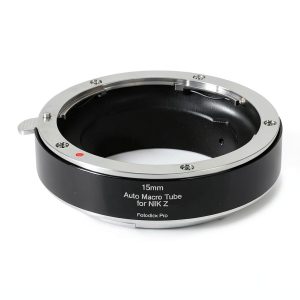
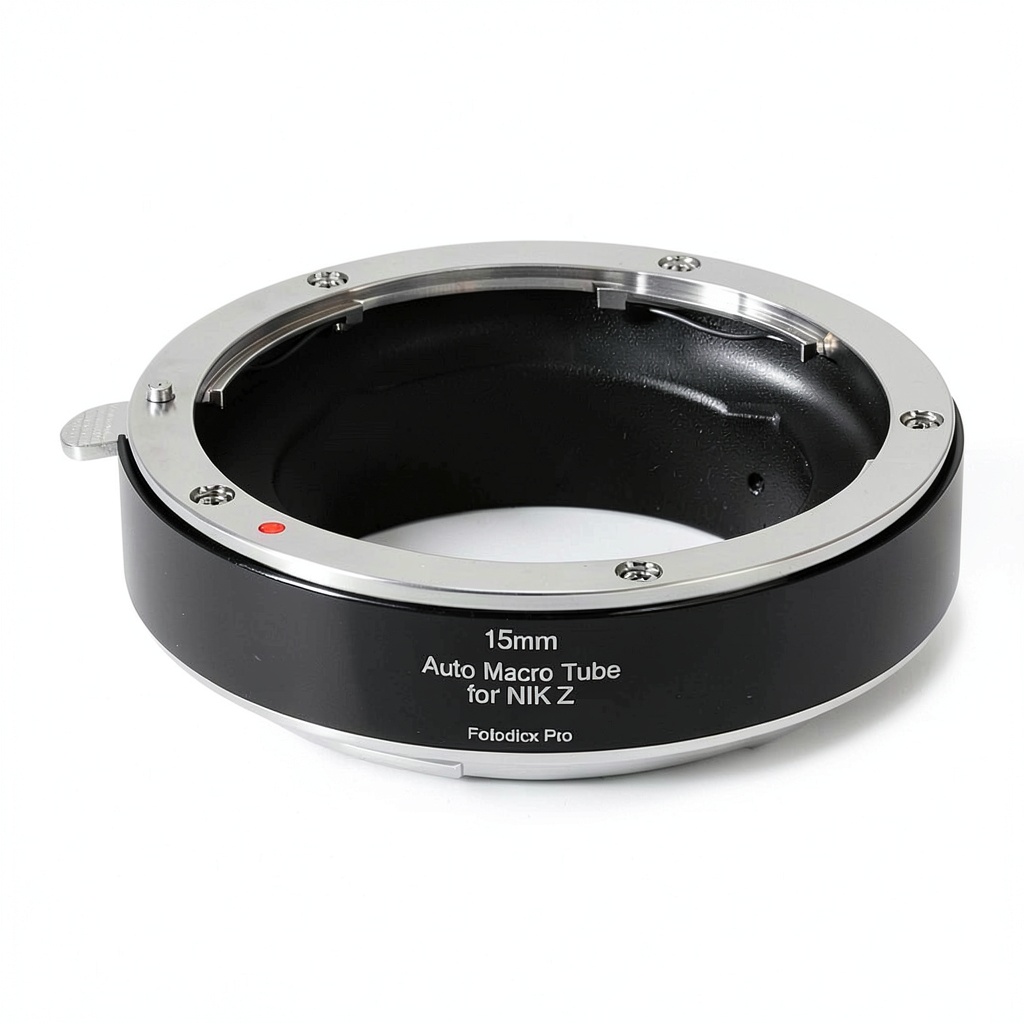
The Fotodiox Pro Auto Macro Extension Tube is a hollow tube that fits between your Canon RF-mount camera body and your lens. By moving the lens further from the sensor, it reduces the minimum focusing distance, allowing you to get much closer to your subject and achieve magnification. The “Pro Auto” designation means it has electrical contacts that maintain full communication between the camera and lens, so autofocus, auto-exposure, and image stabilization (if your lens has it) continue to work.
| Specification | Details |
|---|---|
| Compatibility | Canon RF-Mount Cameras (EOS R, R5, R6, R7, etc.) |
| Construction | Premium Aluminum Alloy |
| Electronic Pass-Through | Full Auto-Focus, Auto-Exposure, EXIF Data, Image Stabilization |
| Finish | Matte Black, Anodized |
| Mount Mechanism | Secure Bayonet with Locking Pin |
| Warranty | 2-Year Limited Warranty |
Real-World Performance & Feature Analysis
Design & Build Quality: No Flex, All Metal
The moment you unbox the Fotodiox tube, the quality is apparent. It has a satisfying heft, and the matte black anodized aluminum feels robust. The mounting bayonets are precisely machined—mounting it to my EOS R and attaching an RF 35mm lens resulted in a solid, click-secure connection with zero play or wobble. This is critical. Cheaper plastic tubes can flex, potentially damaging your camera’s mount or causing misalignment that softens your images. The Fotodiox feels like it’s part of the camera system, not an afterthought.
Performance in Real Use: The Auto-Focus Reality
Here’s where experience trumps the spec sheet. Yes, autofocus works. But macro photography operates at razor-thin depths of field. Even with a small aperture like f/11, your depth of field might be only a few millimeters. The camera’s AF system, while intelligent, often hunts back and forth trying to find contrast in such a shallow plane.
Real-World Scenario: Photographing a Watch Movement
I set up to photograph the intricate gears of a vintage watch. With the tube and a 50mm lens, the magnification was impressive. However, using AF resulted in the lens constantly racking from one extreme to the other, never settling on the tiny gear teeth I wanted. Switching to manual focus and using focus peaking on my EOS R, I could precisely place the focus plane exactly where I needed it. The AF is best used to get you roughly in the ballpark; fine-tuning must be done manually. The electronic pass-through is still invaluable for controlling aperture and having IS active, which helps stabilize the viewfinder for manual focusing.
Ease of Use & The Light Dilemma
Setup is foolproof: camera off, mount tube, mount lens, power on. The real challenge comes with light loss. Extension tubes don’t reduce the maximum aperture of the lens (the f-stop number remains the same), but they do reduce the amount of light that ultimately hits the sensor. This means your camera’s metering will recommend a slower shutter speed. Combined with the high magnification that exaggerates every tiny movement, camera shake becomes your enemy #1.
Real-World Scenario: Outdoor Flower Photography
On a slightly breezy day, I attempted to shoot a bee on a flower. Even with a fast shutter speed (1/500s), the combination of the bee’s movement and the wind moving the flower made it nearly impossible without a massive depth of field (requiring an even smaller aperture and more light). This is a fundamental trade-off. For consistent results, a tripod and a controlled environment—or very bright, continuous lighting—are almost mandatory.
Durability & Reliability
After two months of use, including being tossed in a camera bag (in its included pouch) between shoots, the Fotodiox tube shows no signs of wear. The mounts are unscratched, and the connections remain firm. The 2-year warranty from Fotodiox is a sign of confidence that’s rare at this price point. It’s a simple product—there are no glass elements to de-center—so its reliability is primarily about the physical and electrical connection, both of which have proven robust.
Pros & Cons
Pros:
- Cost-Effective Macro Entry: Drastically cheaper than a dedicated macro lens.
- Solid, Durable Build: All-metal construction inspires confidence and longevity.
- Full Electronic Compatibility: No loss of camera functionality, which is a huge advantage over ‘dumb’ tubes.
- Lightweight and Portable: Adds minimal weight to your kit, perfect for travel.
- Stackable: Can be combined with other tubes for greater magnification.
Cons:
- Amplifies Lens Flaws: Any chromatic aberration or softness in your base lens will be more noticeable.
- Significant Light Loss: Requires good lighting or a tripod to compensate for slower shutter speeds.
- Very Shallow Depth of Field: Demands extreme precision in focusing and aperture selection.
- Short Working Distance: With standard lenses, you end up incredibly close to your subject, potentially casting shadows or scaring living subjects.
Comparison & Alternatives
How does the Fotodiox Pro Auto stack up against the competition? Let’s look at two key alternatives.
Cheaper Alternative: No-Name Plastic Extension Tubes (~$25-$40)
You can find bundles of tubes online for half the price. The primary difference is build quality. These are almost always made of plastic, with less precise mounts that can feel gritty and may not maintain a perfect electronic connection. The risk of flex or a faulty connection isn’t worth the small savings for serious use. Verdict: Choose these only if you’re an absolute beginner on a tight budget and are willing to accept potential reliability issues. The Fotodiox’s metal build and reliable electronics are worth the upgrade.
Premium Alternative: Dedicated Macro Lens (e.g., Canon RF 100mm f/2.8L Macro IS USM, ~$1,100+)
This is the real alternative. A dedicated macro lens like the Canon RF 100mm Macro is optically engineered for flat-field sharpness, has internal focusing (so the lens doesn’t extend), offers 1:1 magnification natively, and includes sophisticated image stabilization. The image quality is in a different league. Verdict: If you are a professional or a serious enthusiast who regularly shoots macro and demands the highest optical quality, a dedicated lens is the only choice. The Fotodiox is a tool to see if you enjoy macro enough to make that investment.
Buying Guide / Who Should Buy
Best For Beginners
If you’re new to macro photography, this is arguably the best way to start. It’s a low-risk investment that lets you learn the core challenges of macro—lighting, depth of field, stability—without spending a fortune. Pair it with a nifty-fifty (like the RF 50mm f/1.8) for a very capable beginner macro setup.
Best For Professionals
For a working pro, this tube is a fantastic ‘macro-lite’ solution for a gear bag. If a client suddenly needs a product shot of a small detail or you’re on a travel job and want to grab some close-up environmental shots, it’s far more convenient than carrying a dedicated macro lens you might only use once. It’s a capable problem-solver.
Not Recommended For
Avoid this product if: You need weather-sealed equipment for outdoor macro work. You primarily shoot fast-moving insects or other unpredictable macro subjects. You require absolute corner-to-corner sharpness for scientific or commercial reproduction work. In these cases, a dedicated macro lens is non-negotiable.
FAQ
What magnification will I get with this extension tube?
Magnification depends on the tube’s length and the focal length of your lens. The formula is (Extension)/(Focal Length). A 50mm lens with a 35mm of extension gives you approximately 0.7x magnification. Combine tubes for more. A true 1:1 macro lens provides 1x magnification.
Does it work with zoom lenses?
Technically, yes. But it’s not ideal. Zoom lenses have complex optics that often don’t respond well to extension. You’ll get the best results with prime (fixed focal length) lenses, especially 35mm, 50mm, or 85mm.
Will it damage my camera or lens?
The Fotodiox Pro is well-made and safe when used correctly. Always mount and unmount with the camera powered off. The risk is far higher with poorly made plastic tubes that can flex or have faulty electrical contacts.
Fotodiox Pro Auto vs. Meike or Vello extension tubes?
Meike and Vello offer similar products. The differences are often minor—warranty length, exact finish, included accessories. The Fotodiox Pro’s 2-year warranty and proven build quality make it a safe bet in this competitive segment.
Is the Fotodiox Pro Auto Macro Extension Tube worth it?
Yes, if you understand its purpose and limitations. It is an outstanding value for photographers wanting to explore macro photography without a significant financial commitment. It’s a tool that rewards technique and patience. If you’re looking for a magic bullet for perfect macro with no effort, it’s not for you. But if you’re willing to learn and work within its constraints, it opens up a fascinating new world of photography for a remarkably low price.