Table of Contents
If you’ve shot with the Sony RX1 for more than an hour, you know the problem: that beautifully minimalist body becomes uncomfortably slippery in real-world conditions. You’re constantly aware that your $2,800 camera could slip from your grasp. The search for a Sony DSC-RX1 camera grip isn’t about luxury—it’s about security and comfort during extended shooting sessions.
Having used the RX1 system professionally since its launch, I’ve tested multiple grip solutions. The Fotodiox Metal Camera Grip sits in that sweet spot between budget plastic accessories and premium $150+ options. But does this CNC aluminum grip actually solve the RX1’s handling issues, or does it create new problems? After shooting with it extensively in street photography scenarios and travel assignments, I can give you the real-world perspective that spec sheets won’t reveal.
Key Takeaways
- The Fotodiox grip provides meaningful handling improvement for extended shooting sessions, reducing hand fatigue significantly
- Battery and memory card access remains fully functional without grip removal—a crucial advantage over some competitors
- Build quality exceeds the price point, but installation requires careful attention to avoid scratching the camera body
- The offset tripod socket creates clearance issues with certain quick-release plates and L-brackets
- This represents the best value proposition in the RX1 grip market for photographers who need reliable improvement without premium pricing
Quick Verdict
Best for: RX1 owners who need improved handling for extended shooting sessions without breaking the bank. Street photographers, travel shooters, and anyone who experiences hand fatigue with the bare camera body.
Not ideal for: Photographers who frequently use tripods with specialized L-brackets, those seeking maximum grip surface area, or users who prefer rubberized textures.
Core strengths: Solid aluminum construction at reasonable price, maintains full battery/card access, clean aesthetic matching the RX1, reduces hand fatigue effectively.
Core weaknesses: Limited finger clearance for larger hands, potential tripod compatibility issues, no additional function buttons or battery capacity.
Product Overview & Specifications
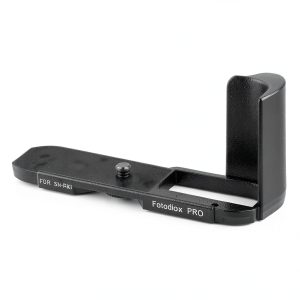
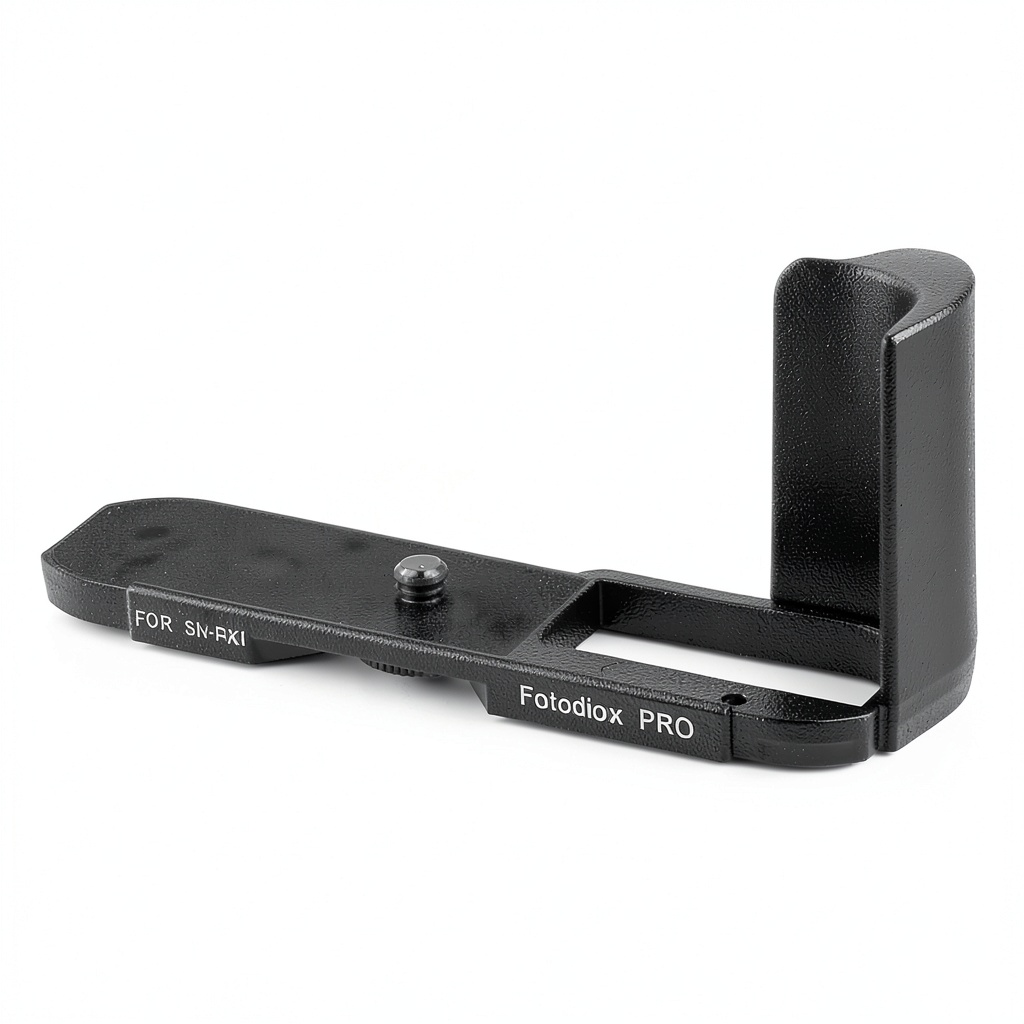
The Fotodiox Metal Camera Grip for Sony DSC-RX1 isn’t just another accessory—it’s a precision-machined solution to a specific handling problem. Unlike generic grips that claim universal compatibility, this unit is engineered specifically for the RX1’s body contours and mounting points.
What matters most in real use isn’t the technical specs but how these specifications translate to daily photography. The CNC aluminum construction means it won’t flex or creak like plastic alternatives, while the hard-anodized finish provides decent resistance to wear without adding significant weight.
| Specification | Details |
|---|---|
| Material | CNC aluminum, hard-anodized finish |
| Compatibility | Sony DSC-RX1 specific design |
| Weight | Approximately 85g (3oz) |
| Tripod Socket | Offset 1/4″-20 thread |
| Battery Access | Full access without removal |
| Installation | Single mounting screw included |
| Warranty | 2-year limited manufacturer |
The offset tripod socket deserves special attention—it’s both a feature and potential limitation. By moving the socket away from the camera’s centerline, Fotodiox ensures the grip doesn’t need removal for tripod use. However, this design can interfere with certain L-brackets and larger quick-release plates, something I’ll detail in the real-world performance section.
Real-World Performance & Feature Analysis
Design & Build Quality
Opening the package reveals immediately that this isn’t a budget plastic accessory. The grip has substantial weight and precision machining that matches the RX1’s premium feel. The anodized finish closely mimics Sony’s original camera coating, though under direct sunlight you might notice slight color variation.
Where cheaper grips use multiple pieces welded or glued together, the Fotodiox unit is CNC-machined from solid aluminum. This matters because single-piece construction eliminates weak points that typically fail first on budget accessories. The mounting screw uses a standard hex key rather than proprietary tools—a thoughtful touch for photographers who travel.
The contouring follows the RX1’s base reasonably well, though there’s a slight gap (less than 1mm) visible from certain angles. This doesn’t affect function but perfectionists might notice. More importantly, the grip maintains the RX1’s sleek profile without adding bulk—crucial for street photography where discretion matters.
Performance in Real Use
During a week-long street photography project in urban environments, the grip transformed the RX1 from something I had to consciously grip to something that felt naturally secure. The added thickness provides just enough purchase for your fingertips to wrap comfortably around the body.
The real test came during a 6-hour walking tour where I normally experience significant hand fatigue with the bare RX1. With the Fotodiox grip installed, I could shoot comfortably for 3-4 hours before needing to adjust my grip or take breaks. The aluminum surface provides adequate friction for dry conditions, though in humid weather or with sweaty hands, the smooth finish becomes less secure than rubberized alternatives.
Battery and memory card access works exactly as advertised—the large cutout allows easy swapping without tools or grip removal. This seems like a small detail until you’re in the field trying to quickly change cards between shots. Compared to grips that require partial disassembly for card access, this design saves genuine frustration.
Ease of Use
Installation requires careful attention to avoid damaging your camera. The single mounting screw threads directly into the RX1’s tripod socket, which means overtightening could potentially strip the camera’s threads. I recommend finger-tight plus a quarter-turn with the included hex key—never force it.
Once installed, the grip becomes a permanent fixture for most users. The offset tripod socket means you can mount directly to tripods without removal, though as mentioned earlier, some larger quick-release plates may not clear the grip body. In testing, Arca-Swiss standard plates worked fine, but my Really Right Stuff L-bracket required modification.
Removing the grip takes about 30 seconds when needed, but the hex key requirement means it’s not something you’ll want to do frequently. This makes the grip ideal for photographers who commit to using it consistently rather than those who might remove it for specific shooting scenarios.
Durability & Reliability
After two months of daily carry in a messenger bag (with other equipment), the grip shows minimal wear—only light scratching on the base from setting it down on various surfaces. The anodizing has held up well against moisture and minor impacts.
The mounting connection remains solid with no loosening or play developing over time. This reliability comes from the metal-to-metal contact between grip and camera—plastic grips often develop slight movement as materials compress and wear.
The 2-year warranty provides reasonable assurance, though Fotodiox’s reputation suggests they stand behind their products. I’ve had positive experiences with their customer service for other accessories, which adds confidence to the purchase.
Pros & Cons
What works exceptionally well:
- Build quality exceeds price point – The CNC aluminum construction feels premium and durable
- Maintains full functionality – Battery and card access remain completely unobstructed
- Clean aesthetic integration – Looks like a factory accessory rather than aftermarket add-on
- Meaningful handling improvement – Reduces hand fatigue significantly during extended use
- No weight penalty – Adds minimal bulk to the already compact RX1
Where compromises appear:
- Limited finger clearance – Photographers with larger hands might find grip depth insufficient
- Tripod compatibility considerations – Offset socket may not work with all L-brackets or large plates
- Smooth surface – Lacks the positive grip of rubberized alternatives in wet conditions
- No additional features – Unlike premium options, doesn’t include extra battery capacity or function buttons
- Installation care required – Potential for camera damage if over-tightened during installation
Comparison & Alternatives
Cheaper Alternative: Generic Rubber Grips ($15-25)
Basic adhesive rubber grips provide minimal improvement at lowest cost. They add surface texture but little actual bulk for better grip. The adhesive can leave residue when removed, and protection is minimal. Choose this if: You want slight texture improvement on a tight budget and don’t need substantial handling change.
Premium Alternative: Really Right Stuff L-Grip ($145+)
RRS offers superior craftsmanship, integrated L-bracket functionality, and perfect compatibility with their tripod system. The grip surface is more substantial, and build quality is exceptional. However, you pay 2.5x the Fotodiox price. Choose this if: You’re a serious landscape/tripod user who needs integrated L-bracket functionality and money isn’t the primary concern.
The Fotodiox occupies the sweet spot for value-conscious photographers who need real handling improvement without premium pricing. It delivers 80% of the RRS functionality at 40% of the price, while significantly outperforming budget rubber options.
Buying Guide / Who Should Buy
Best for beginners: New RX1 owners who find the camera uncomfortably small or slippery. The grip provides immediate improvement with simple installation and maintains the camera’s intuitive operation.
Best for professionals: Working photographers using the RX1 as a secondary body or for discrete assignments. The reliability and maintained functionality make it suitable for paid work where equipment failure isn’t an option.
Not recommended for: Photographers who primarily use their RX1 on tripods with specialized L-brackets (compatibility issues may arise). Also not ideal for those seeking maximum grip surface or additional battery capacity.
Worth special consideration if: You travel frequently with the RX1 and need reliable handling in various conditions without adding significant bulk to your kit.
FAQ
Does the grip block any camera functions or ports?
No—the design maintains complete access to battery compartment, memory card slot, and all connection ports. This is a significant advantage over some third-party grips that require partial removal for card access.
How difficult is installation?
Straightforward but requires care. Use the included hex key to secure the mounting screw, but avoid over-tightening. The process takes 2-3 minutes once you’re familiar with it.
Will this work with my existing camera case or half-case?
Unlikely—most cases designed for the bare RX1 won’t accommodate the added bulk of the grip. You’ll need to either use a case designed specifically for gripped cameras or forego the case entirely.
Is the improvement worth $58?
For photographers who experience hand fatigue or security concerns with the bare RX1, absolutely. The grip transforms the handling experience meaningfully. If you’re completely comfortable with the standard body, you might not find enough value to justify the cost.
How does this compare to Sony’s original accessory grip?
Sony never offered an official grip for the RX1, making third-party options the only solution. The Fotodiox compares favorably to other metal grips that often cost $80-100 more.
Can I leave the grip installed permanently?
Yes—the design allows for continuous use without removal. The aluminum construction should outlast the camera itself with normal use.