Table of Contents
- Key Takeaways
- Quick Verdict
- Product Overview & Specifications
- Real-World Performance & Feature Analysis
- Design & Build Quality
- Performance in Real Use: The Zoom is the Star
- Ease of Use: Perfect for Beginners
- Image & Video Quality: Managing Expectations
- Battery Life & Connectivity
- Pros & Cons
- Comparison & Alternatives
- Buying Guide / Who Should Buy
- FAQ
If you’re tired of your smartphone’s limitations but intimidated by complex DSLRs, you’ve probably searched for a “bridge camera” – a camera that bridges the gap between simple point-and-shoots and professional gear. The Minolta ProShot MN26Z, with its promise of a massive 26x optical zoom and 20MP resolution at an affordable price, seems to hit that sweet spot on paper. But as someone who’s tested dozens of cameras in this category, I know specs only tell half the story.
Does this camera deliver the zoom power and image quality beginners hope for, or does it cut too many corners? After putting the MN26Z through its paces on family outings, during travel, and in various lighting conditions, I’ll give you the real-world insights that spec sheets can’t.
Key Takeaways
- The 26x zoom is genuinely impressive for the price, letting you capture distant wildlife or sports action that a phone simply can’t reach.
- Image quality is decent in good light but struggles significantly in low light, with noise becoming noticeable above ISO 800.
- Operation is straightforward for beginners, with helpful auto modes, but the plastic build feels less premium than some competitors.
- Built-in Wi-Fi is a convenient feature for quick sharing, though the companion app feels dated compared to modern standards.
- Battery life using AA batteries is a practical choice for travelers who can easily find replacements, but dedicated rechargeable batteries would offer better performance.
Quick Verdict
The Minolta ProShot MN26Z is best for beginners and casual photographers who want an all-in-one camera with a powerful zoom for daytime photography, without the complexity or cost of an interchangeable lens system. It’s particularly well-suited for travel, family events, and outdoor activities where light is plentiful.
It’s not ideal for serious enthusiasts demanding DSLR-level image quality, photographers who frequently shoot in low-light conditions without a flash, or anyone needing 4K video capability.
Core Strengths: Exceptional zoom range for the price, user-friendly automatic modes, convenient AA battery power, and solid daylight image quality.
Core Weaknesses: Noticeable image noise in low light, plastic construction that feels somewhat cheap, and video capabilities limited to 1080p.
Product Overview & Specifications
The Minolta ProShot MN26Z sits firmly in the entry-level bridge camera category. It’s designed to offer a taste of advanced photography with its manual controls (P/S/A/M modes) while remaining accessible enough for someone moving up from a smartphone. The “bridge” concept is key here—it has a fixed lens with a massive zoom range, eliminating the need to carry and change lenses.
What matters most in practice is that this single lens covers an enormous range, from a reasonably wide 24mm (great for group shots and landscapes) to an ultra-telephoto 624mm (perfect for pulling distant subjects close). This versatility is the main reason you’d choose a bridge camera over a smartphone or a basic compact.
| Specification | Details |
|---|---|
| Sensor | 20.0 Megapixel (1/2.3″ CMOS) |
| Lens & Zoom | 26x Optical Zoom (4.0-104mm, 35mm equivalent: 24-624mm) |
| Image Stabilization | Optical Image Stabilization (OIS) |
| LCD Screen | 3.0-inch IPS LCD |
| Video Recording | 1080p Full HD |
| ISO Range | ISO 100 – 3200 |
| Connectivity | Built-in Wi-Fi |
| Power Source | 4x AA Batteries (included) |
| Shooting Modes | Auto, Program, Aperture Priority, Shutter Priority, Manual, Scene Modes, Face Beautifier |
Real-World Performance & Feature Analysis
Design & Build Quality
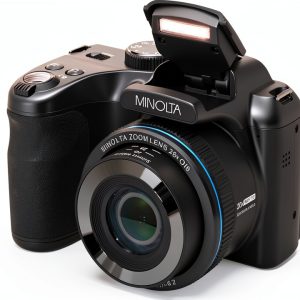
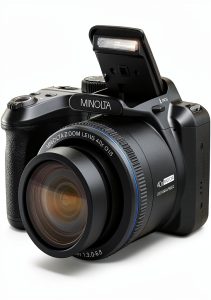
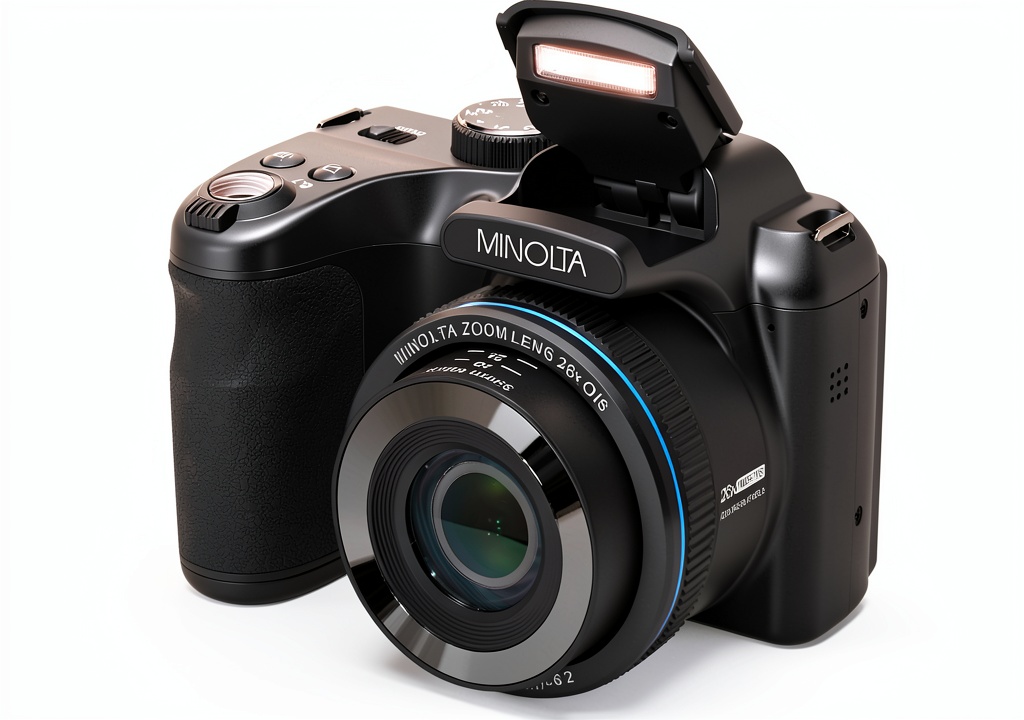
Unboxing the MN26Z, the first thing you notice is that it’s lightweight and almost entirely plastic. For a camera under $200, this is expected, but it’s worth noting. The grip is reasonably comfortable, and the camera is light enough to carry around your neck all day without fatigue—a significant advantage over bulkier DSLRs. The button layout is logical, with a mode dial on top and a four-way controller on the back for quick access to settings like flash and timer.
The trade-off for the light weight is that it doesn’t feel as robust or weather-sealed as more expensive bridge cameras from Sony or Panasonic. I wouldn’t want to subject it to rough handling or a downpour. The lens extends quite far at full zoom, and while the mechanism feels steady, the plastic barrel reinforces the need for careful use.
Performance in Real Use: The Zoom is the Star
The 26x optical zoom is this camera’s headline feature, and in practice, it doesn’t disappoint. I took it to a local park to photograph birds, and the ability to go from a wide shot of the lake to a tight frame on a duck dozens of meters away is genuinely impressive. The Optical Image Stabilization (OIS) is absolutely critical here. At full zoom, even the slightest hand movement is magnified. The OIS does a decent job of keeping the image steady in the viewfinder, though for the sharpest shots, bracing against a tree or using a mini tripod is still recommended.
The real limitation emerges when the light starts to fade. The small 1/2.3″ sensor, common in cameras at this price, struggles in low light. Shooting indoors without a flash or during the golden hour, I noticed images becoming grainy (noisy) at ISO levels above 800. The camera tries to compensate by slowing the shutter speed, which can lead to blurry photos if you or your subject moves. This is the fundamental compromise: you get a huge zoom range in a small package, but you sacrifice performance in challenging light.
Ease of Use: Perfect for Beginners
If you’re new to photography beyond your phone, the MN26Z is designed for you. The full Auto mode handles everything competently. Point, shoot, and you’ll get a decently exposed photo in good conditions. The various scene modes (Portrait, Landscape, Sports, etc.) are helpful shortcuts that optimize settings for specific situations. The “Face Beautifier” mode is a fun addition for casual portrait shots.
For those ready to learn, the PASM modes are a great entry point. You can start with Program mode (P), where the camera sets exposure but allows you to adjust other settings like ISO, then graduate to Aperture or Shutter Priority to control depth of field or motion blur. The menu system is straightforward, though not as polished as on cameras from first-tier brands.
Image & Video Quality: Managing Expectations
In bright daylight, the 20MP sensor captures a good amount of detail, and colors are generally vibrant. Don’t expect the dynamic range (the ability to hold detail in bright skies and dark shadows) of a larger-sensor camera, but for sharing online or making small prints, the results are more than acceptable.
Video is a clear weak point by modern standards. While 1080p was once the benchmark, many phones and competitors now offer 4K. The 1080p footage is usable for home movies but lacks the sharpness and detail of higher-resolution video. The autofocus can sometimes “hunt” (go in and out of focus) during video recording, which can be distracting.
Battery Life & Connectivity
The use of AA batteries is a double-edged sword. The major advantage is practicality: if you’re traveling in a remote area and run out of power, you can pop into any store and get new batteries. However, standard alkaline AAs don’t last very long, especially if you use the zoom and flash frequently. I strongly recommend investing in a set of high-capacity Ni-MH rechargeable AA batteries and a charger; this transforms the experience, giving you much longer shooting time and is more cost-effective and eco-friendly in the long run.
The built-in Wi-Fi works for transferring photos to your smartphone using the Minolta ProShot app. It gets the job done, but the connection process can be clunky compared to the seamless NFC/Bluetooth pairing found on more recent cameras. It’s a useful feature, but don’t expect it to be as smooth as AirDrop or Google Nearby Share.
Pros & Cons
Pros:
- Excellent zoom range for the price, making distant subjects accessible.
- Very easy to use for beginners with effective auto and scene modes.
- Good image quality in bright, daylight conditions.
- AA battery power offers great flexibility when traveling.
- Includes manual controls for learning photography basics.
Cons:
- Image quality degrades significantly in low-light situations.
- Build quality is mostly plastic and feels somewhat cheap.
- Video quality is limited to 1080p and shows its age.
- Wi-Fi connectivity and app feel outdated.
- Battery life with standard alkaline AAs is mediocre.
Comparison & Alternatives
To understand the MN26Z’s place in the market, it’s helpful to compare it to both a cheaper and a more premium alternative.
Cheaper Alternative: Used Previous-Generation Bridge Cameras
For a budget under $150, you might consider a used bridge camera from a major brand like a Canon Powershot SX540 HS or a Nikon Coolpix B500. These can often be found on the secondhand market. The trade-off? You’re buying older technology, which might mean slower performance, less refined features, and no warranty. The MN26Z, as a new product, offers peace of mind with a warranty and the latest (though still entry-level) tech for its class.
Premium Alternative: Sony Cyber-shot DSC-HX99 (~$450)
Stepping up to a camera like the Sony HX99 reveals what you’re missing. For more than double the price, you get a more compact metal body, a sharper lens, a higher-resolution electronic viewfinder (EVF), significantly better performance in low light, and 4K video recording. The autofocus is also faster and more reliable. The choice is clear: if your budget allows and you’re serious about image quality and features, the HX99 is a much more capable camera. If you’re a beginner on a tight budget who primarily shoots in daylight, the MN26Z represents a much better value.
Buying Guide / Who Should Buy
Best For Beginners: If you are new to photography and want an affordable, all-in-one camera to learn on, the MN26Z is a solid choice. Its automatic modes make it easy to start, while the manual controls provide a pathway to grow your skills without the immediate need to invest in a more expensive system.
Best For Travelers and Families: The incredible zoom range is perfect for capturing vacation memories, from wide-angle landscape shots to zooming in on architectural details or wildlife. The light weight and AA battery compatibility are big pluses when packing light or traveling to places with limited access to power outlets.
Not Recommended For:
- Aspiring Professionals: The image quality limitations, especially in low light, will quickly become frustrating if you plan to sell your photos or print them large.
- Videographers: The 1080p video quality and basic features are not suitable for any serious video work.
- Low-Light Enthusiasts: If you frequently shoot indoors at concerts, in museums, or at night, the small sensor will be a major hindrance.
FAQ
Is the Minolta ProShot MN26Z good for wildlife photography?
It can be, with a major caveat. The 26x zoom (624mm equivalent) is certainly long enough to capture distant animals and birds. However, wildlife photography often requires fast autofocus and good performance in the variable light of early morning or late evening, where the MN26Z struggles. It’s a great starter camera for casual wildlife shots in good light, but serious wildlife photographers will need a camera with a larger sensor and faster lens.
How does it compare to a DSLR?
A DSLR (or mirrorless camera) with an interchangeable lens system offers superior image quality, much better performance in low light, faster autofocus, and greater creative control. However, it’s also larger, heavier, and significantly more expensive once you factor in multiple lenses to cover the same zoom range as the MN26Z. The bridge camera wins on convenience and cost; the DSLR/mirrorless wins on performance and quality.
Can I use a tripod with this camera?
Yes, the MN26Z has a standard tripod mount on the bottom. Using a tripod is highly recommended for shooting at full zoom or in low-light situations to eliminate camera shake and achieve the sharpest possible images.
Is the Minolta ProShot MN26Z worth it in 2026?
For a beginner or budget-conscious user who understands its limitations, yes, it remains a worthwhile option. While smartphone cameras have improved dramatically, they still can’t match the optical zoom capability of the MN26Z. If your primary goal is to get closer to the action without breaking the bank, this camera delivers on that promise. Just be realistic about its performance in low light.