Table of Contents
- Key Takeaways
- Quick Verdict
- Product Overview & Specifications
- Real-World Performance & Feature Analysis
- Design & Build Quality
- Performance in Real Use
- Ease of Use
- Durability & Reliability
- Pros & Cons
- Comparison & Alternatives
- Cheaper Alternative: Panasonic Lumix GH6
- Premium Alternative: Sony FX6
- Buying Guide / Who Should Buy
- Best for Beginners
- Best for Professionals
- Not Recommended For
- FAQ
You’re researching cinema cameras, and the Blackmagic Pocket Cinema Camera 6K Pro keeps appearing in your searches. The specs look impressive on paper – 6K resolution, 13 stops of dynamic range, built-in ND filters – but you’re wondering what it’s actually like to work with day-to-day. Having used this camera extensively on documentary shoots, commercial projects, and even short films, I can tell you the reality is more nuanced than the marketing materials suggest.
The 6K Pro sits in a fascinating space between consumer cameras and high-end cinema rigs. It offers image quality that rivals cameras costing three times as much, but demands a specific workflow and mindset to harness its potential. If you’re tired of compromising on image quality but don’t have Hollywood budgets, this review will give you the real-world perspective you need to decide if the 6K Pro fits your production needs.
Key Takeaways
- The 6K Pro delivers exceptional image quality that competes with cameras costing significantly more, particularly in color science and dynamic range
- Built-in ND filters and dual native ISO make it incredibly versatile for changing lighting conditions without additional gear
- The camera requires substantial accessories and power management solutions to be usable for extended shoots
- DaVinci Resolve Studio inclusion represents tremendous value for colorists and editors
- Autofocus limitations make it unsuitable for solo shooters in fast-moving situations
Quick Verdict
Best for: Independent filmmakers, commercial videographers, and content creators who prioritize image quality over convenience and have the workflow to support large file sizes.
Not ideal for: Solo operators needing reliable autofocus, run-and-gun documentarians, or those without robust computer systems for 6K footage.
Core strengths: Unmatched image quality for the price, built-in professional features (ND filters, dual gain ISO), excellent color science, and DaVinci Resolve Studio inclusion.
Core weaknesses: Poor battery life, limited autofocus capabilities, requires significant accessories for professional use, and generates massive file sizes.
Product Overview & Specifications
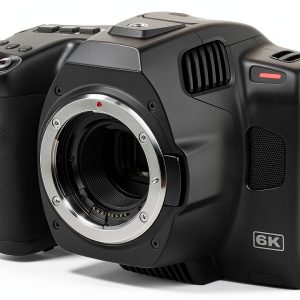
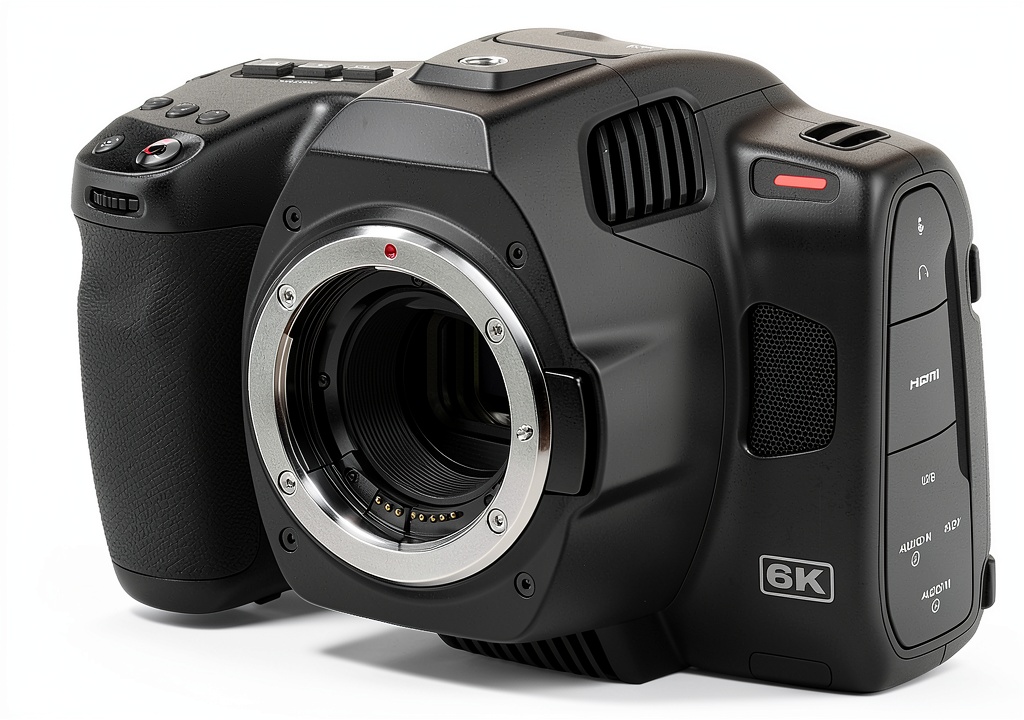
The Blackmagic Pocket Cinema Camera 6K Pro represents the culmination of Blackmagic Design’s approach to democratizing cinema-quality imaging. At its core, it’s a Super 35 sensor camera that records up to 6K resolution in Blackmagic RAW or ProRes formats, giving filmmakers unprecedented flexibility in post-production. What separates it from competitors isn’t just the resolution, but the holistic approach to cinema workflow.
Having worked with this camera across multiple projects, I appreciate how Blackmagic has addressed practical filmmaker concerns. The built-in ND filters alone save hundreds of dollars in matte boxes and filter systems, while the bright 5-inch touchscreen eliminates the immediate need for external monitors in many situations. The camera feels like it was designed by people who actually shoot films, not just engineers building feature checklists.
| Specification | Details |
|---|---|
| Sensor Size | Super 35 (6144 x 3456) |
| Max Resolution | 6K (6144 x 3456) at 50fps |
| Dynamic Range | 13 stops |
| ISO Range | 100-25,600 (Dual Native 400/3200) |
| ND Filters | Built-in 2, 4, 6 stop |
| Recording Formats | Blackmagic RAW, ProRes, H.265 |
| Storage Media | CFast 2.0, SD/UHS-II, USB-C SSD |
| Display | 5-inch HDR touchscreen LCD |
| Included Software | DaVinci Resolve Studio |
| Battery | NP-F570 (approx. 45-60 mins recording) |
Real-World Performance & Feature Analysis
Design & Build Quality
The 6K Pro strikes an interesting balance between professional robustness and accessible design. The carbon fiber polycarbonate composite body feels substantial without being excessively heavy – at approximately 2.5 pounds with battery and lens, it’s manageable for handheld work but definitely requires proper support for extended shooting. The redesigned handgrip represents a significant improvement over previous models, providing a more secure hold during handheld operation.
Where the design truly shines is in the thoughtful placement of controls. The front record button, top-mounted ISO and white balance controls, and well-positioned function buttons create an intuitive shooting experience once you’re accustomed to the layout. The tiltable 5-inch screen is bright enough for outdoor use in most conditions, though direct sunlight still presents challenges. The camera doesn’t feel cheap, but it also doesn’t have the tank-like construction of higher-end cinema cameras – a fair trade-off given the price point.
Performance in Real Use
The image quality is where the 6K Pro truly justifies its existence. Having shot with cameras ranging from DSLRs to ARRI Alexas, I can confidently say the 6K Pro’s image holds up remarkably well against much more expensive options. The Super 35 sensor delivers beautiful depth of field characteristics, and the color science produces natural skin tones and rich colors that require minimal grading.
The dual native ISO at 400 and 3200 is a game-changer for low-light work. At ISO 3200, the image remains remarkably clean with minimal noise, making it ideal for evening shoots or interior locations with limited lighting. I’ve used this camera for documentary work in dimly lit environments where other cameras would have required additional lighting, and the results were broadcast-quality.
The built-in ND filters transform your shooting workflow. On a recent commercial shoot transitioning from interior to exterior locations, being able to switch between 2, 4, and 6 stops of filtration without fumbling with matte boxes saved precious time and maintained shooting momentum. This feature alone makes the 6K Pro worth considering for documentary and run-and-gun work where lighting conditions change rapidly.
Ease of Use
Blackmagic’s approach to usability reflects their cinema-first mentality. The menu system is logically organized and the touchscreen interface is responsive, but there’s a learning curve if you’re coming from DSLR or mirrorless cameras. The camera assumes you understand concepts like false color, waveform monitors, and shutter angle rather than shutter speed.
The autofocus deserves special mention because it’s the camera’s most significant limitation. While continuous autofocus has improved from previous models, it’s nowhere near the reliability of Sony or Canon systems. For interviews, controlled shots, or any situation where you can pull focus manually, it’s fine. But if you need reliable autofocus for fast-moving subjects or solo operation, this isn’t your camera.
Battery life remains a persistent challenge. The included NP-F570 battery provides about 45-60 minutes of actual recording time, meaning you’ll need multiple batteries or an external power solution for anything beyond short shoots. I typically use a V-mount battery solution for anything longer than an hour, which adds to the overall rig size but provides all-day power.
Durability & Reliability
After six months of regular use across various conditions, the 6K Pro has held up well. The body shows minimal wear despite being transported in various bags and used in both studio and location environments. The ports feel secure, and the screen hinge maintains its tension. The carbon fiber construction seems to withstand minor bumps and vibrations better than all-metal bodies that can dent.
I haven’t experienced any overheating issues, even during extended 4K recording sessions in warm environments. The camera maintains consistent performance, though the body does get noticeably warm during prolonged use. The recording media options provide good redundancy – I typically record simultaneously to CFast 2.0 for primary and SSD via USB-C for backup.
Pros & Cons
Pros:
- Exceptional image quality that rivals cameras costing 3x more
- Built-in ND filters save money and simplify workflow
- Dual native ISO provides excellent low-light performance
- Inclusion of DaVinci Resolve Studio ($295 value)
- Multiple recording format options (BRAW, ProRes, H.265)
- Bright, usable touchscreen display
- Robust codec options for flexible post-production
Cons:
- Poor battery life requiring external power solutions
- Autofocus unreliable for critical applications
- Generates massive file sizes requiring substantial storage
- Requires significant accessories for professional use
- No in-body image stabilization
- Learning curve for non-cinema users
Comparison & Alternatives
Cheaper Alternative: Panasonic Lumix GH6
The Panasonic GH6 sits at approximately $1,700 and offers excellent value for hybrid shooters. Where the GH6 excels is in its stabilization system, reliable autofocus, and more manageable file sizes. The Micro Four Thirds sensor doesn’t provide the same depth of field or low-light performance as the 6K Pro’s Super 35 sensor, but for documentary work or situations where you need to move quickly, the GH6’s feature set might better suit your needs. Choose the GH6 if you prioritize stabilization, autofocus, and hybrid photo/video capabilities.
Premium Alternative: Sony FX6
At around $6,000, the Sony FX6 represents the next significant step up in professional cinema cameras. You’re paying for superior autofocus, better low-light performance, built-in electronic ND filters, and a more robust professional ecosystem. The FX6 integrates better into professional workflows with timecode sync and more extensive mounting options. If you need reliable autofocus, superior low-light capabilities, and professional features for fast-paced environments, the FX6 justifies its higher price.
Buying Guide / Who Should Buy
Best for Beginners
Surprisingly, the 6K Pro can be an excellent learning tool for serious beginners who want to understand professional cinema workflows. The direct access to camera controls and the inclusion of DaVinci Resolve Studio create a complete ecosystem for learning color grading and proper exposure techniques. However, beginners should be prepared for a steep learning curve and additional investment in accessories like batteries, storage, and possibly external monitors.
Best for Professionals
Independent filmmakers, commercial videographers, and content creators who control their shooting conditions will get the most value from the 6K Pro. The image quality-to-price ratio is exceptional, and the camera integrates well into professional workflows. If you’re already working with DaVinci Resolve, the seamless integration with BRAW files creates an efficient post-production pipeline. Professionals will appreciate the built-in ND filters and dual gain ISO, which save time and money on location.
Not Recommended For
Avoid the 6K Pro if: You need reliable autofocus for solo operation, you shoot in fast-moving documentary situations where you can’t control lighting, or you don’t have a computer capable of handling 6K footage. The camera’s limitations in these areas will frustrate more than its image quality will impress.
FAQ
Is the Blackmagic 6K Pro worth the investment for independent filmmakers?
Absolutely, if you value image quality above all else and have the workflow to support large file sizes. The combination of cinema-quality images, professional features like built-in ND filters, and DaVinci Resolve Studio inclusion creates tremendous value. However, factor in the cost of accessories – you’ll likely spend an additional $500-$1000 on batteries, storage, and support equipment.
How does the 6K Pro compare to the Sony FX30?
The Sony FX30 offers better autofocus, longer battery life, and more manageable file sizes, while the 6K Pro delivers superior image quality, better color science, and more professional features like built-in ND filters. Choose the FX30 for run-and-gun work and the 6K Pro for controlled shooting environments.
What’s the real-world battery life like?
With the included NP-F570 battery, expect 45-60 minutes of actual recording time. For anything beyond short shoots, plan on using multiple batteries or an external power solution like a V-mount battery.
Is the autofocus really as bad as people say?
For photography-style continuous autofocus, yes – it’s unreliable for critical work. However, for single AF acquisition or situations where you can pull focus manually, it’s perfectly usable. This camera rewards traditional filmmaking techniques.
What computer specs do I need for 6K footage?
You’ll need a relatively modern computer with a dedicated GPU, fast storage, and plenty of RAM. For comfortable editing, aim for at least 32GB RAM, a GPU with 8GB VRAM, and NVMe storage. The proxy workflow in DaVinci Resolve helps with less powerful systems.