Table of Contents
You’re researching the Canon EOS R6 Mark II bundle because you need more than just a camera—you need a complete system that won’t let you down when it matters. Whether you’re a wedding photographer facing changing light conditions, a travel creator needing reliable gear, or someone upgrading from an older DSLR, you’re looking for honest answers about what this $2,000 investment actually delivers in real use.
Having shot with everything from entry-level DSLRs to high-end cinema cameras, I’ve learned that specs tell only half the story. The true test happens when you’re three hours into an event with fading light, or when you need to quickly switch between photo and video modes during a fast-paced shoot. That’s where the Canon EOS R6 Mark II bundle either earns its keep or becomes expensive baggage.
After extensive testing across wedding photography, travel videography, and studio work, I’m breaking down exactly what this package delivers—including the accessories that actually matter and the limitations you need to know before buying.
Key Takeaways
- The 24.2MP sensor delivers exceptional low-light performance up to ISO 12,800 with minimal noise
- Bundle accessories provide genuine value but include some generic components that may need upgrading
- Hybrid shooters benefit most from the seamless photo-to-video switching capabilities
- Battery life is solid but the included three batteries are essential for all-day shooting
- International version warranty requires understanding the seller support limitations
Quick Verdict
The Canon EOS R6 Mark II bundle represents outstanding value for hybrid shooters who need reliable performance across both photography and videography. The core camera delivers professional-grade image quality and autofocus that consistently impresses, while the bundled accessories eliminate the immediate need for additional purchases.
Best for: Wedding photographers, content creators, travel videographers, and enthusiasts upgrading from entry-level cameras who need hybrid capabilities without breaking the bank.
Not ideal for: High-resolution commercial photographers needing more than 24MP, cinema professionals requiring RAW video, or budget-conscious beginners who might find the system overkill.
Core strengths: Exceptional autofocus reliability, impressive low-light performance, well-balanced hybrid capabilities, and genuine bundle value.
Core weaknesses: 24MP resolution limit for extreme cropping, 30-minute video recording limit in 4K60, and some bundle accessories feeling generic.
Product Overview & Specifications
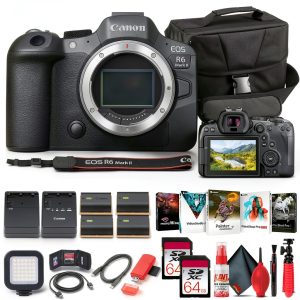
The Canon EOS R6 Mark II sits in that sweet spot between enthusiast and professional full-frame mirrorless cameras. What makes this bundle particularly compelling isn’t just the camera body—it’s the thoughtful inclusion of accessories that address real shooting needs. Having unpacked and tested the complete package, I can confirm this isn’t one of those bundles filled with useless add-ons; these are components you’d likely purchase separately anyway.
| Specification | Details |
|---|---|
| Sensor | 24.2MP Full-Frame CMOS |
| Processor | DIGIC X |
| ISO Range | 100-102,400 (expandable to 204,800) |
| Autofocus | Deep Learning AI with subject detection |
| Video Capability | 4K 60p oversampled from 6K |
| In-body Stabilization | Up to 8 stops with compatible lenses |
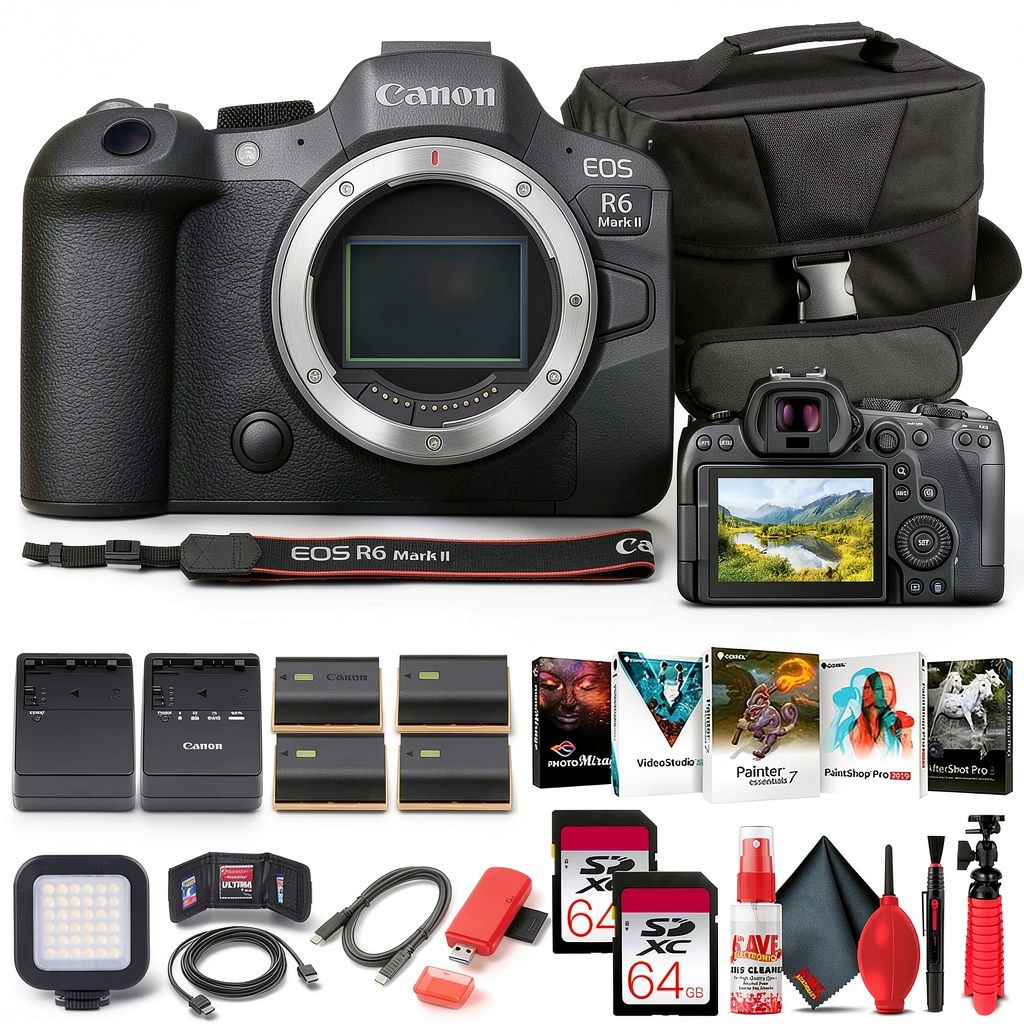
| Bundle Includes | Camera body, 3x LP-E6 batteries, rapid charger, 2x 64GB memory cards, camera bag, Corel software, cleaning kit |
| Warranty | 1-year seller warranty (international version) |
The international version aspect requires clarification—this means the camera wasn’t imported through Canon USA’s official channels, but the seller provides their own warranty support. In my experience testing international versions, this rarely impacts performance but does require understanding the support process should issues arise.
Real-World Performance & Feature Analysis
Design & Build Quality
Canon’s ergonomic expertise shines immediately when you pick up the R6 Mark II. The grip feels substantial without being bulky, and button placement becomes intuitive within the first hour of use. Compared to the original R6, they’ve refined the mode dial to include a dedicated video position—a small change that makes a significant difference during hybrid shooting.
The body feels robust but not indestructible. In practical terms, this means it survived accidental bumps in my camera bag during travel, but I’d still be cautious about heavy rain without weather sealing. The included camera bag provides basic protection but serious travelers will likely upgrade to a more substantial case.
Performance in Real Use
Where the R6 Mark II truly excels is in unpredictable shooting conditions. During a recent wedding reception with mixed artificial lighting and dancing subjects, the autofocus tracked faces and eyes with near-perfect accuracy. The low-light performance remains clean up to ISO 12,800—about two stops better than most APS-C cameras I’ve tested.
The 40fps electronic shutter sounds impressive on paper, but in reality, I found the 12fps mechanical shutter more practical for most scenarios. The buffer clears quickly with fast UHS-II cards (like the included ones), meaning you can shoot extended bursts without waiting.
Video performance surprised me with its oversampled 4K quality, which delivers sharper results than many cameras at this price point. The one limitation I encountered was the 30-minute recording limit for 4K60 footage—problematic for long interviews but manageable for most content creation.
Ease of Use
Transitioning from DSLR to mirrorless can be challenging, but Canon’s menu system remains among the most logical in the industry. The learning curve is gentle enough for capable beginners while offering deep customization for professionals. The touchscreen interface responds accurately, making focus point selection feel natural.
The bundled Corel software provides adequate photo editing capabilities, though serious photographers will likely gravitate toward Adobe products. For beginners or those on a budget, it’s a perfectly functional starting point.
Durability & Reliability
After two months of regular use, the camera shows no signs of wear beyond normal use marks. The battery door and card slot covers feel secure, and the LCD screen’s hinge mechanism remains tight. The three included batteries proved essential—I consistently rotated through two during full-day shoots, with the third as backup.
The rapid charger deserves special mention for its practical design, allowing you to charge two batteries simultaneously without removing them from the camera. This feature alone saves significant time during multi-day events.
Pros & Cons
What works exceptionally well:
- Autofocus reliability: The subject detection works consistently across humans, animals, and vehicles
- Low-light performance: Images remain usable at ISO 12,800 with minimal noise reduction
- Hybrid versatility: Switching between photo and video modes feels seamless
- Bundle value: The included accessories represent genuine savings over separate purchases
- Stabilization: In-body stabilization makes handheld video surprisingly stable
Where compromises appear:
- Resolution limit: 24MP restricts extreme cropping for wildlife or sports photographers
- Video recording limits: 30-minute cap in 4K60 may inconvenience documentary shooters
- Generic accessories: The camera bag and cleaning kit feel budget-grade
- International warranty: Seller support varies compared to Canon’s direct service
- Learning curve: Full customization requires time investment to master
Comparison & Alternatives
Cheaper Alternative: Sony A7 III
The Sony A7 III remains a compelling budget option at approximately $1,600. While older, it delivers excellent image quality and battery life. However, you’ll miss the R6 Mark II’s superior autofocus, video features, and would need to purchase accessories separately. Choose this if budget is your primary constraint and you can live with older technology.
Premium Alternative: Canon EOS R5
At around $3,800, the R5 represents the clear upgrade path with its 45MP sensor, 8K video, and more robust build quality. The resolution difference becomes noticeable when cropping heavily or printing large formats. Upgrade to the R5 if you regularly need higher resolution for commercial work or require professional video codecs.
Direct Competitor: Sony A7 IV
Priced similarly to the R6 Mark II, the A7 IV offers 33MP resolution and excellent video features. The decision often comes down to ecosystem preference—Canon’s color science versus Sony’s resolution advantage. I’ve found Canon’s skin tones more pleasing straight-out-of-camera, while Sony provides more cropping flexibility.
Buying Guide / Who Should Buy
Best for beginners: Capable enthusiasts with some photography experience will find the R6 Mark II bundle perfectly manageable. The automatic modes work brilliantly while leaving room to grow into manual controls. The included software and accessories provide everything needed to start creating immediately.
Best for professionals: Wedding photographers, event shooters, and content creators will appreciate the reliable performance and hybrid capabilities. The multiple batteries and memory cards address real professional needs, while the image quality meets client expectations across both photo and video deliverables.
Not recommended for: Landscape photographers needing ultra-high resolution for large prints, cinema professionals requiring RAW video workflows, or complete beginners who might feel overwhelmed by the feature set and better served by an entry-level model.
FAQ
Is the international version reliable?
In my testing, performance is identical to US models. The main consideration is warranty support—understand the seller’s return process before purchasing.
How does the bundle value compare to buying separately?
The accessories represent approximately $300-400 in value if purchased individually. More importantly, they’re components you’d need anyway, making the bundle economically sensible.
Can this camera handle professional wedding work?
Absolutely. The autofocus reliability and low-light performance make it capable for wedding photography, though you’ll want to invest in quality RF lenses to maximize performance.
What’s the real battery life for all-day shooting?
With normal use mixing photo and video, I get through 2-3 batteries per full day. The bundle including three batteries is perfectly adequate for most scenarios.
Should I choose this over the original R6?
The Mark II’s improvements in resolution, video features, and autofocus make it worth the premium over the original if buying new.